
Generate and store power where agricultural demand exists.
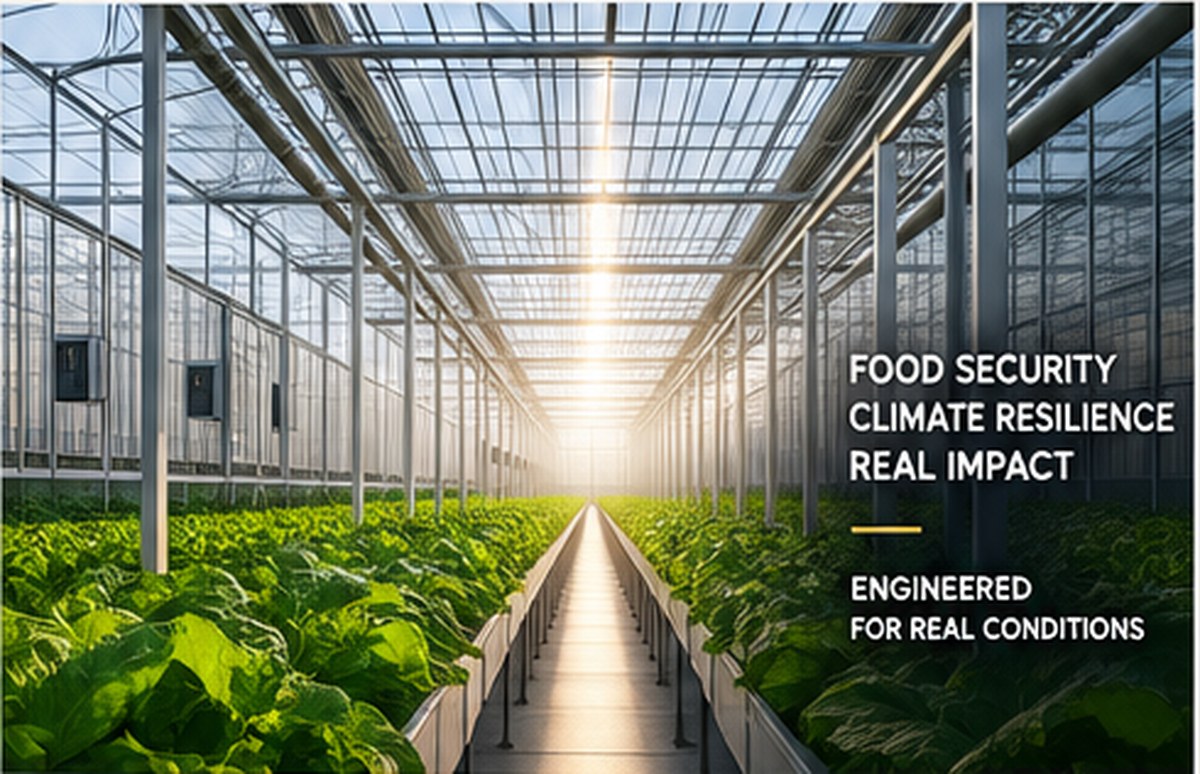
START WITH REAL CONDITIONS
Design around the environment, not an ideal laboratory.
Heat, dust, water scarcity, changing sunlight, grid instability, maintenance access and crop requirements are not secondary constraints. They are primary inputs to the architecture.
That changes the engineering question from “what technology can we add?” to “what combination of energy, control, water and cultivation makes sense here?”
SYSTEM THINKING
Energy, water, climate and cultivation are one operating problem.
Measure, circulate and allocate water according to crop and system demand.
Ventilate, cool, shade and circulate only as much as conditions require.
Choose hydroponic, substrate or conventional methods according to the crop and environment.
MINIMUM NECESSARY INTERVENTION
We do not force the climate. We adapt to it.
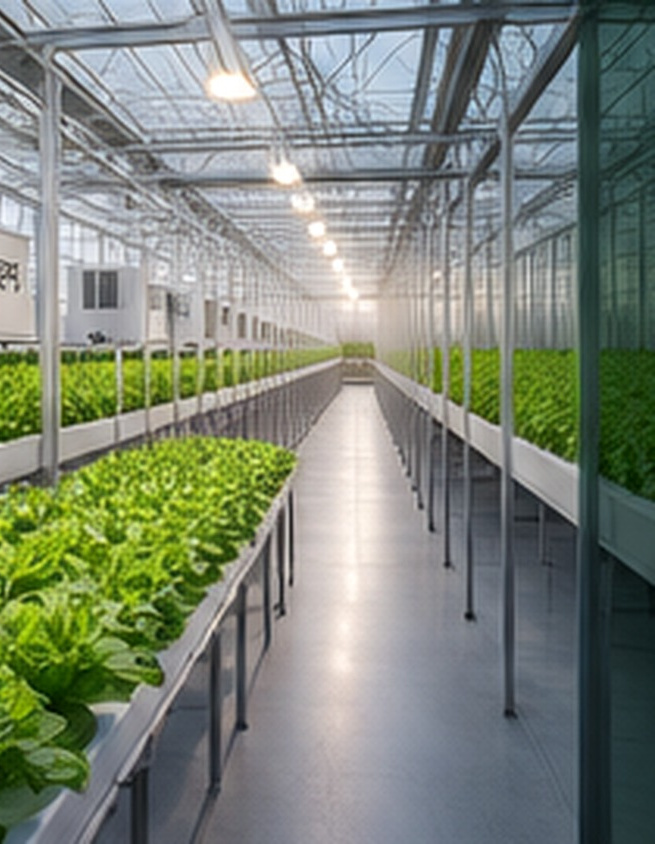
The greenhouse observes temperature, humidity, radiation, water availability, battery state and crop requirements. Control decisions then respond to actual conditions instead of maintaining one fixed state regardless of energy and water cost.
The goal is not maximum automation. The goal is the minimum necessary intervention required to maintain an effective growing environment.
LONG-TERM ENGINEERING
Understandable. Serviceable. Adaptable.
Local adaptation
Solutions are configured for actual climate and infrastructure.
System integration
Components exchange information instead of operating in isolation.
Resource efficiency
Energy and water are managed as finite operating resources.
Serviceability
Systems should remain maintainable and understandable in the field.
Scalability
Architecture can grow from pilot installations to larger sites.